Skills management software is a central system where an organization defines required skills, collects verified data on what employees can do and compares it with what each role demands. The reason it matters is not training volume, it is visibility. Fewer than half of organizations have a clear sense of the skills they already have, […]
An error budget is 100% minus your SLO, the amount of unreliability you have agreed in advance that you can afford. At a 99.9% target that is 0.1% of the window, roughly 43 minutes of downtime a month. That number tells you when to ship and when to stop. Your team ships. Incidents pile up. […]
Your cost to serve one customer sets the floor. What buyers say they would pay sets the ceiling. Your first price is a deliberate point between them, not a guess. Companies that combine a base subscription with a usage component report the highest median growth rate at 21 percent. That is the short version of […]
Career management software connects three things that usually live apart. It holds the roles your organization has, the competencies each role requires, and the learning that closes the gap between them. Most companies already own the third part and almost none own the first two. That gap has a price. Only 36% of organizations have […]
API-first architecture means the API is designed first, as a versioned contract written in an API specification, and every feature of the product is reachable through that same API. That one design choice decides whether your learning platform slots into your HRIS, your single sign-on, and your reporting stack, or whether each of those becomes […]
Development for managers works when it is a continuous program of professional development built on coaching habits, measurable development goals and protected time, not a one-off formal training event. The stakes are hard to overstate. Managers account for at least 70% of the variance in employee engagement at team level. Below you will find the […]
A skills gap analysis compares the skills your workforce has today with the skills required to reach business goals. It then turns that difference into a clear plan for workforce development, hiring, employee training or compliance. The point is simple. HR should know which skills exist, which skills are missing and what action will close […]
A coherent learning ecosystem connects experiences, workflows, identity and data around measurable capability outcomes. Build it by mapping critical processes, assigning one authoritative source per data domain and integrating only tools that close a documented gap. The World Economic Forum says more than 1 billion people need reskilling by 2030. What Is a Learning Ecosystem, […]
You do not need every type of software test. Choose the fastest reliable test for the product risk, system boundary, and change you need to control. ISTQB CTFL v4.0.1 addresses four test types and states that exhaustive testing is impossible, while ISO/IEC 25010:2023 defines nine product quality characteristics. What are the main types of software […]
Building a learning platform starts with goals, roles, source systems, and rollout logic, not with a feature wishlist. The strongest evidence from the research is that hidden costs can add 20–40% to the initial budget and that safe UAT usually needs 4–6 weeks, so implementation planning must be structured around risk, not optimism. What is […]
A scalable LMS is not the one with the biggest user count claim, but the one that maintains speed, stability, and administrative control as concurrency, integrations, and complexity grow. That matters because research cited in the brief shows only 9% of organizations are fully satisfied with their LMS, while the UCL cloud migration case improved […]
Personalized learning can improve retention, reduce learner drop-off, and strengthen engagement without forcing EdTech teams into a full platform rebuild. The most effective approach is usually incremental: add targeted features such as adaptive content, personalized feedback, and flexible learning paths on top of your existing product. In this article, we look at how personalized learning […]
A dedicated software development team is usually the better choice when roadmap pressure is high, hiring takes too long, and internal leadership has no bandwidth to onboard more people. The strongest proof is the combined effect of 45–60 days to hire a senior developer, 15–25% annual salary recruitment cost, and 20–50% faster time-to-market in the […]
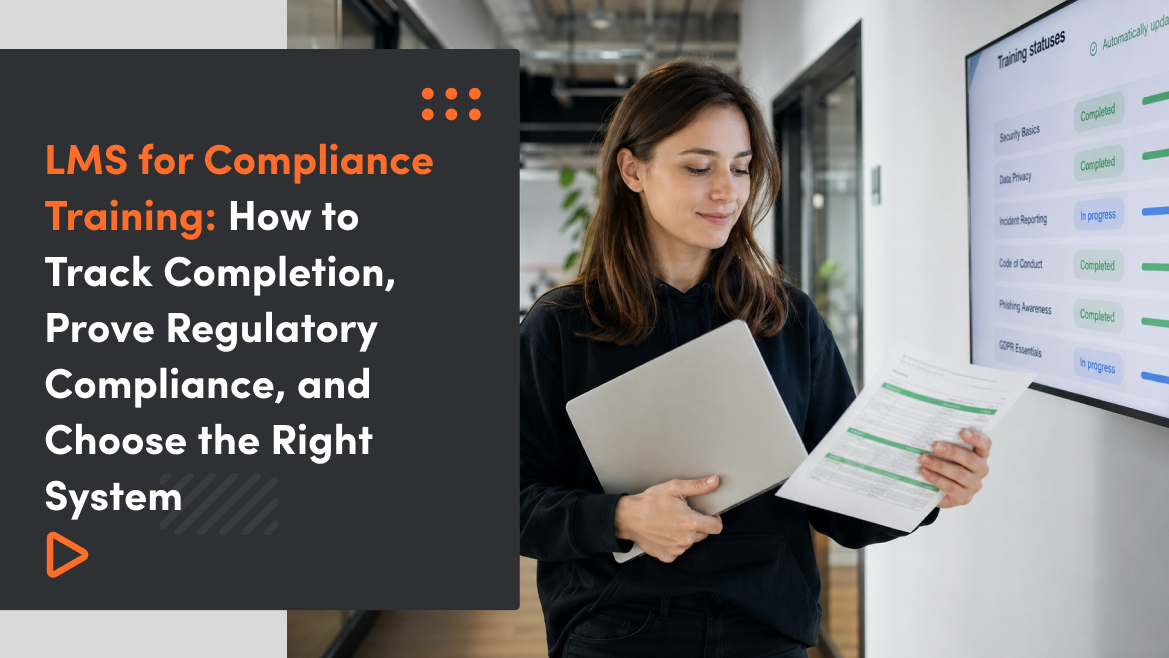
A compliance LMS is not just a training tool, it is a system of record that automates assignments, tracks completions, and produces audit-ready evidence. That matters because LMS spending is still growing fast toward USD 54.86B by 2031, while employers expect 39% of core skills to change by 2030, increasing pressure on organizations to manage […]
Creating eLearning content in a corporate setting is less about authoring slides and more about building a system of record that can assign, track, and prove completion across tools and teams. LinkedIn’s Workplace Learning Report 2025 shows 49% of L&D pros say executives worry employees lack the skills to execute strategy, so reporting integrity matters. […]
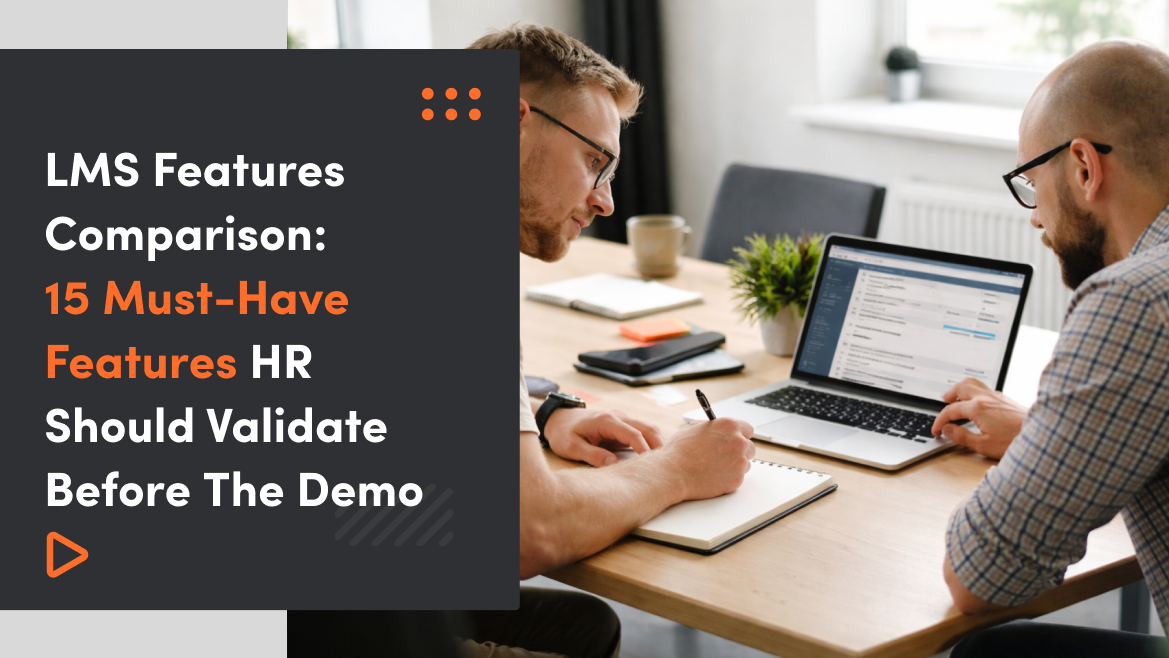
LMS features comparison only makes sense when you compare a system against a real use case and validate it live in a demo. This guide gives simple rules for when cloud is enough and when building your own is safer. We focus on integrations, learner tracking, and audit-ready reporting you can actually export. What is […]
Mar 24, 2026 ・16 min-read
SaaS Founder Starter Academy
Everything you need to know to successfully launch your SaaS app.